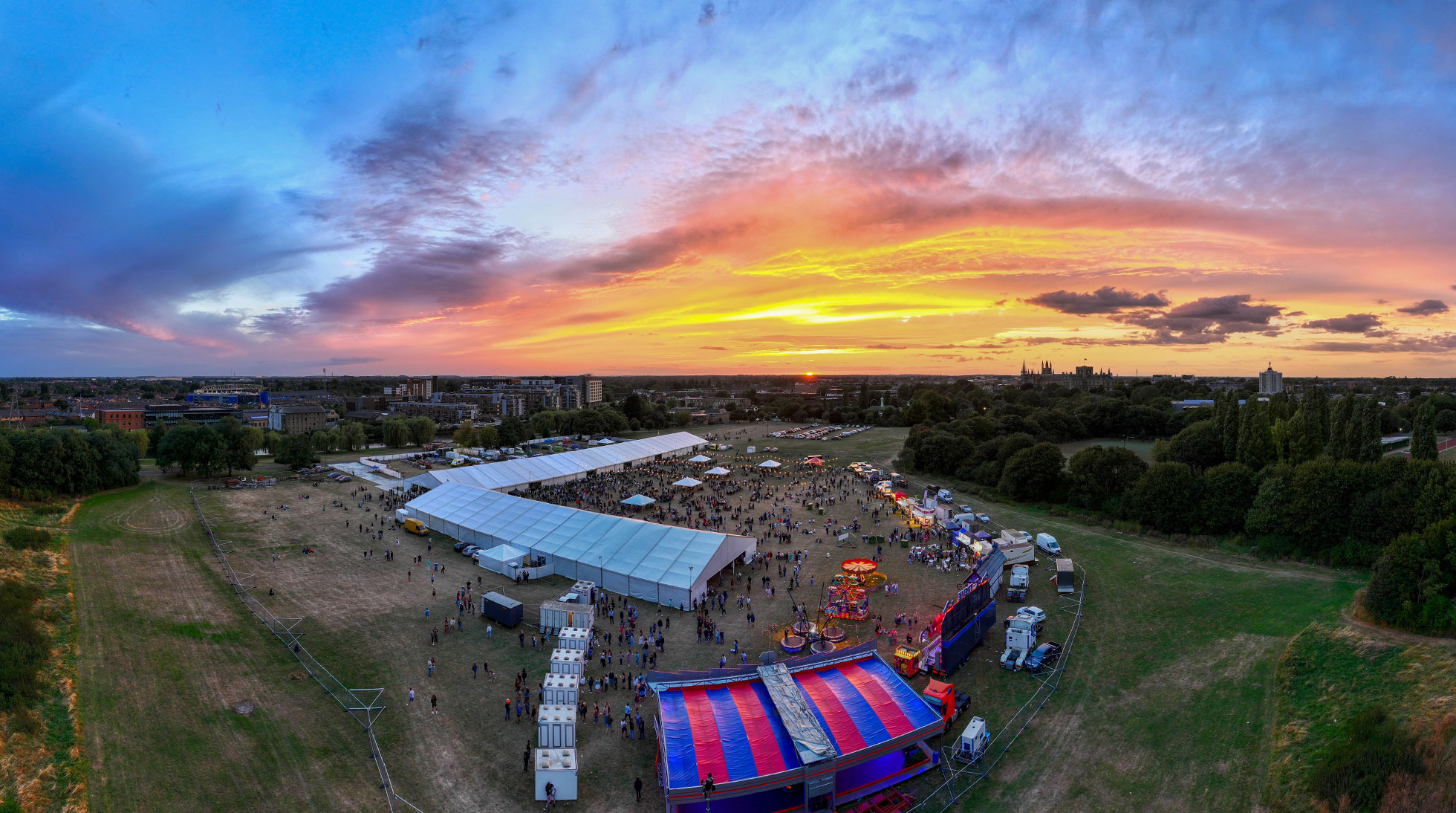
Stand in Cathedral Square during a festival, or along the Embankment when the city gathers for the annual beer festival, and you can feel how quickly private lives become collective presence. Conversation overlaps. Music carries across open air. A crowd listens, responds and shifts together.
It feels contemporary, but it is not new.
As a cathedral city, Peterborough was long a place where news was spoken aloud. Royal decrees and ecclesiastical instructions were proclaimed in public space. Markets were not only centres of trade but centres of communication. Messages were read, repeated and carried outward along roads and river routes. What began in one square might travel by word of mouth far beyond it.
Speech was infrastructure.
Before widespread print, proclamation was how authority travelled. The act of reading aloud transformed parchment into public knowledge. The Guildhall and market square became stages as much as structures. To stand before a crowd and speak was to participate in civic ritual.
Expression here was not only declarative. It was musical.
In a cathedral city, singing formed part of the public soundscape. Choral tradition gave collective voice to shared belief and shared time. Music moved through stone and across open air. It required participation, whether in performance or in listening. Song carried words further than speech alone.
Sound bound people together.
Over time, voice settled into record. Monastic scribes chronicled events. What was written shaped memory. As literacy expanded and print arrived, authorship widened. Pamphlets, newspapers and debate extended participation beyond those who could stand in the square.
The instinct to gather did not disappear as mediums changed. It adapted.
Industrial growth brought meeting halls and organised discussion. Political movements and community groups found platforms. In the twentieth century, broadcast amplified speech further. In the twenty-first, digital platforms accelerate it again.
Yet the underlying habit remains constant.
People gather. Messages circulate. Voices respond.
Today, that voice is layered and plural. Spoken word nights, poetry readings and open mic events continue a long tradition of public articulation. The square may now be a theatre, a café or a community hall, but the act is recognisable. Someone stands. Others listen. Language carries experience outward.
The city’s soundscape has also changed. Peterborough is home to many languages, each carrying its own cadence, memory and worldview. Markets, schools and neighbourhoods echo with accents that speak of migration, resettlement and renewal. Public expression is no longer singular. It is heterogeneous by nature.
Where once proclamation travelled outward from a single authority, voice now travels in many directions at once.
If image allowed Peterborough to see itself, public voice allowed it to hear itself. Over time, that hearing became reciprocal. Expression shifted from announcement to exchange.
The mediums change, but the instinct endures. Meaning here is not only carved into stone or painted onto walls. It is spoken, sung and shared in many tongues.
And when a city gathers to speak, it also begins to learn how to listen.
#Peterborough2029
#ThisIsPeterborough
#DiscoverPeterborough
Photo by Terry Harris/Discover Peterborough