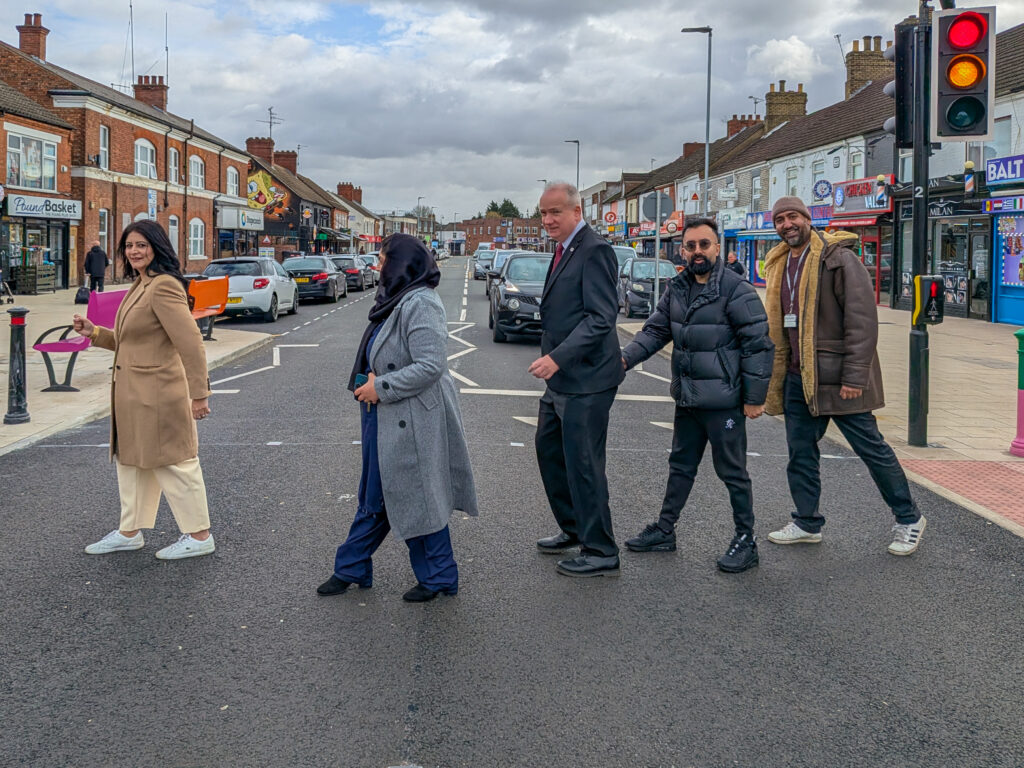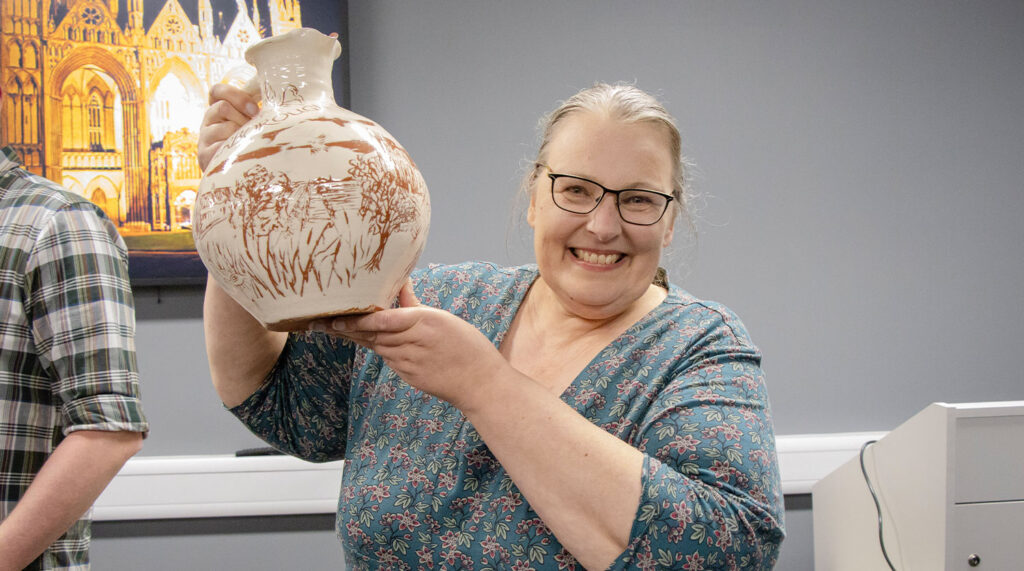
Last week we explored the ground beneath Peterborough. We traced the wetlands, the timber causeways, the early ingenuity that allowed communities to settle between water and firm land. This week we turn to what rose from those foundations. Expression takes many forms here. It lives in architecture and image, in proclamation and poetry, in public art and in the widening of civic voice. Over the coming days, we will move from stone and paint to word and participation, tracing how Peterborough learned not only to endure, but to articulate itself.
Across the flat horizon of the Fens, the spires of Peterborough Cathedral rise with quiet certainty. For centuries, they have provided the city with a vertical reference point, a measure of proportion in a landscape defined by openness. The skyline did not compete. It gathered itself around this form.
As settlement stabilised and communities deepened, meaning became visible. The instinct to adapt gave way to the instinct to interpret. Architecture, image and language began to carry shared values. The city did not only endure. It articulated.
In a place shaped by horizontal fields and wide skies, height carries meaning. The Cathedral did more than mark devotion. It oriented the city. It established scale. It signalled ambition. Carved stone and vaulted space communicated permanence in a landscape otherwise defined by change.
Architecture here has long been a form of speech.
For centuries, the Cathedral’s presence shaped growth around it rather than against it. Even now, sightlines towards its towers are protected in planning decisions. This is not restriction but recognition. Certain landmarks hold collective meaning beyond function. They anchor identity.
Yet expression in Peterborough has never been singular or solely monumental.
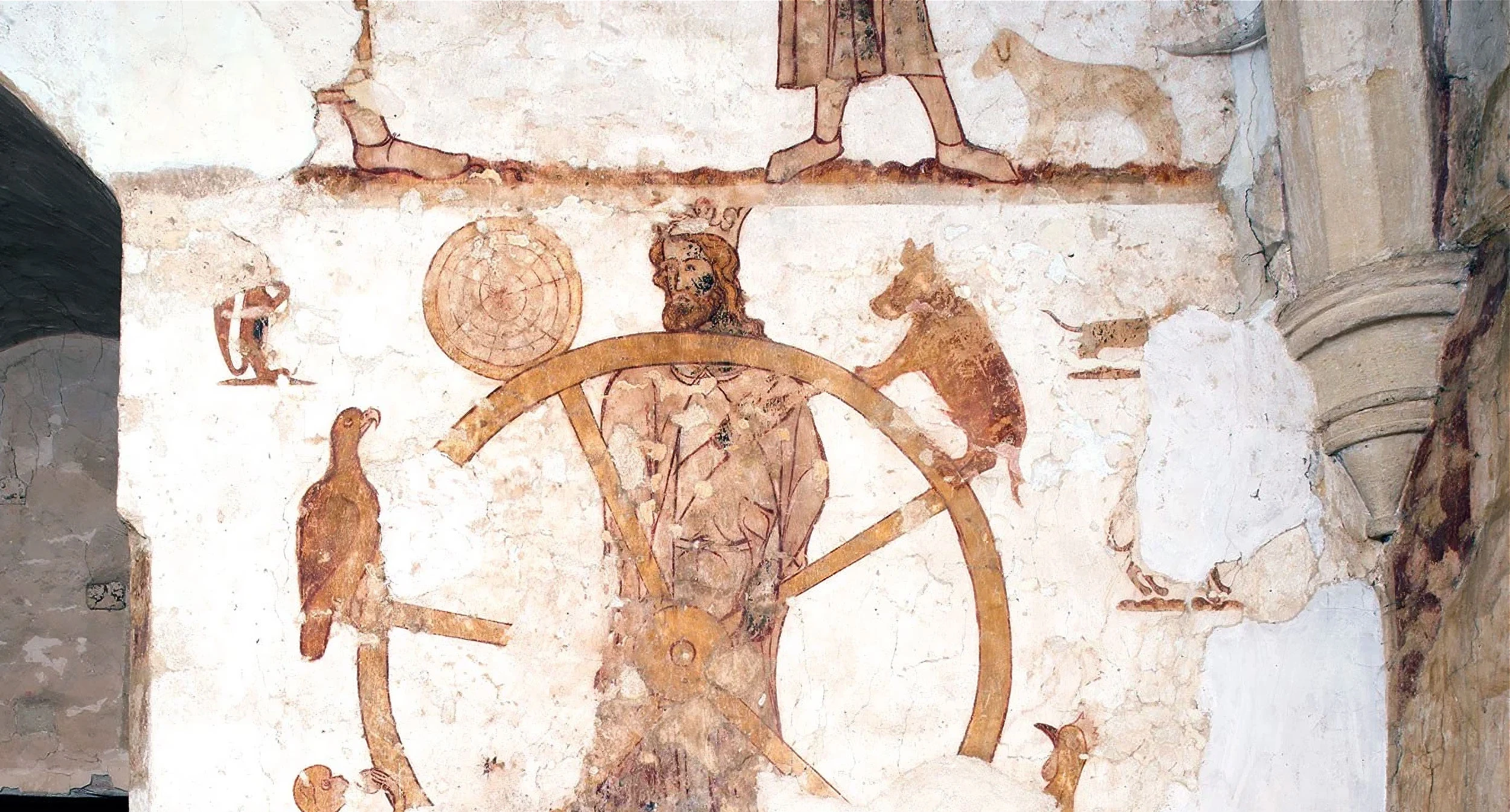
A short distance away, Longthorpe Tower reveals a different register of imagination. Its fourteenth-century wall paintings survive as rare and intimate examples of medieval domestic art. Allegory and symbol were painted into private rooms. Story lived beside everyday life.
Together, these buildings reveal something fundamental. Expression here was both public and personal. Monumental and interior. Institutional and imaginative.
Stone became language. Pigment became narrative.
Over time, that language widened.
Images carved into church façades taught moral lessons. Chronicles recorded memory. Markets echoed with proclamation. Landscape itself would later become poetry in the hands of John Clare. Visual art would continue to transform public walls. Contemporary artists would reinterpret lived experience for national audiences.
The mediums shift. The instinct remains.
Peterborough learned to articulate itself early.
It learned that meaning can be built. That values can be carved. That imagination belongs in public space.
This week traces that evolution, from stone and paint to word and image, from authority to participation, from single voice to shared conversation.
Before poetry, before print, before plural authorship expanded the circle, stone spoke first.
And when it did, character became visible.
#Peterborough2029
#ThisIsPeterborough
#DiscoverPeterborough