Yesterday we looked at the ground beneath Peterborough. Today, we look at the lines that run across it.
If landscape shaped the instinct to adapt, routes shaped the instinct to connect.
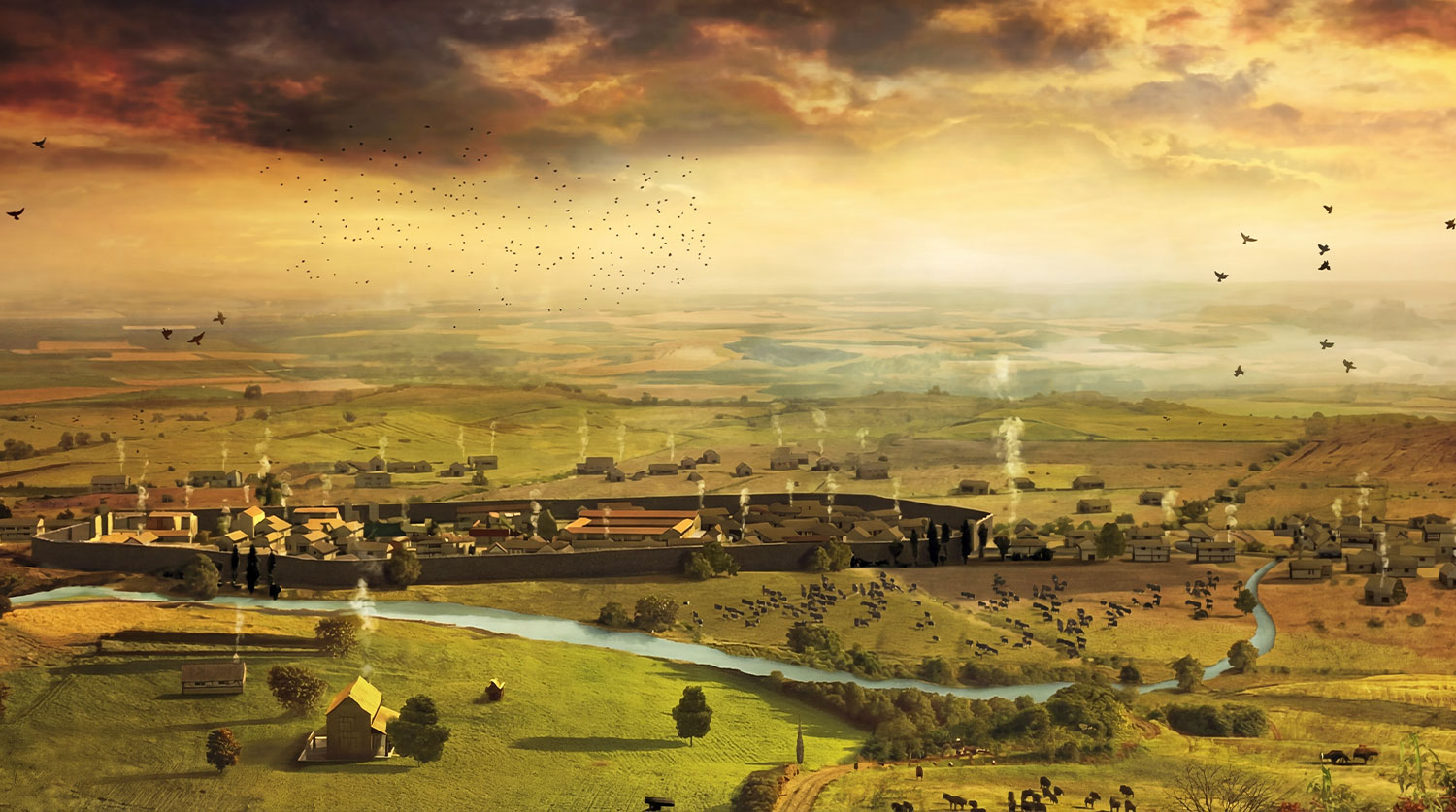
In the woodland at Castor Hanglands, the quiet canopy conceals traces of Roman occupation. Nearby stood Durobrivae, one of the most significant Roman towns in eastern Britain. Its placement was not incidental. It stood at a convergence of land routes and navigable water, strategically positioned to link this region to the wider Roman world.
Yet Rome did not invent movement here.
Long before paved roads formalised connection, prehistoric communities were already engaged in exchange. Artefacts discovered at sites such as Must Farm reveal materials that travelled significant distances. Metalwork, tools and crafted goods demonstrate participation in networks that stretched far beyond immediate settlement.
Exchange was embedded in this landscape from early on.
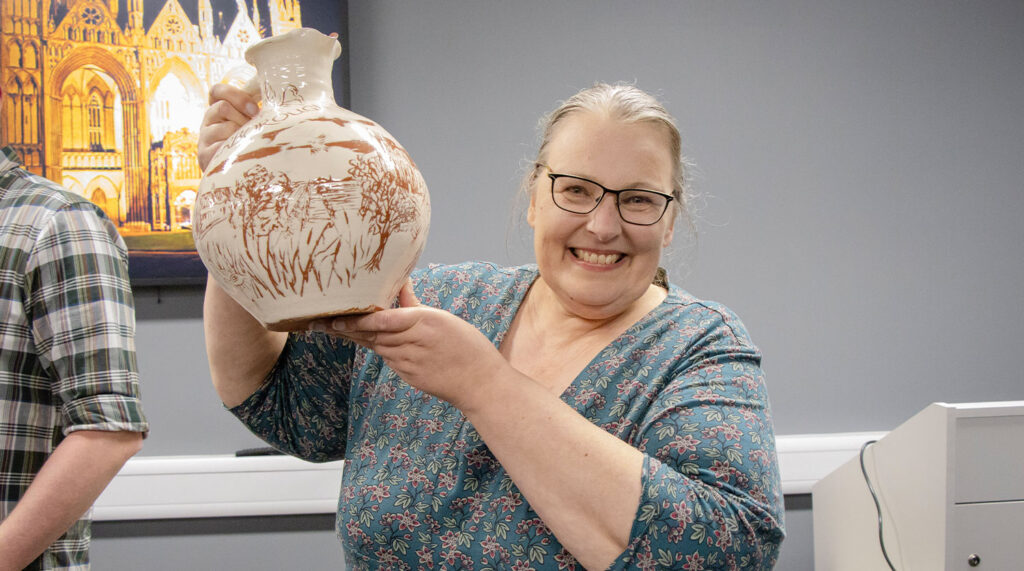
What Rome introduced was scale and system. Roads structured movement with precision. Trade intensified. Durobrivae became known for pottery production, with kilns supplying goods across the region. Clay from this landscape was transformed into vessels that travelled outward, carrying with them a mark of origin.
Routes are rarely neutral. They do more than transport goods. They shape identity.
Settlement at a crossroads produces exposure to difference. It brings ideas, languages and customs into contact. It demands flexibility. Communities that endure in such places develop a capacity to absorb and reinterpret influence rather than resist it.
This has long been Peterborough’s condition.
The Roman route that passed through this region did not disappear with imperial withdrawal. It was reworked, reimagined and reconnected across centuries. Later roads followed similar alignments. Movement continued to trace inherited lines.
At Ferry Hill, the Robin Hood Stones stand as a reminder that landscapes accumulate stories alongside infrastructure. Whether the legend has medieval roots or later embellishment, the myth binds imagination to place. Routes carry narrative as well as commerce.
It is tempting to describe Peterborough today as newly connected, newly accessible, newly dynamic. Yet history suggests otherwise. The instinct to settle at a meeting point is ancient. The willingness to participate in broader exchange is inherited.
Modern Peterborough continues to attract movement. Migration, trade, commuting and enterprise intersect here. Accessibility remains one of the city’s defining characteristics. But rather than representing a break from the past, this pattern extends it.
Durobrivae reminds us that this landscape has long been outward-looking. Its economy and identity were shaped in relation to elsewhere.
To exist at a crossroads is to live in conversation with the wider world.
That conversation has been taking place here for centuries.
#Peterborough2029
#ThisIsPeterborough
#DiscoverPeterborough