Must Farm Bronze Age Settlement
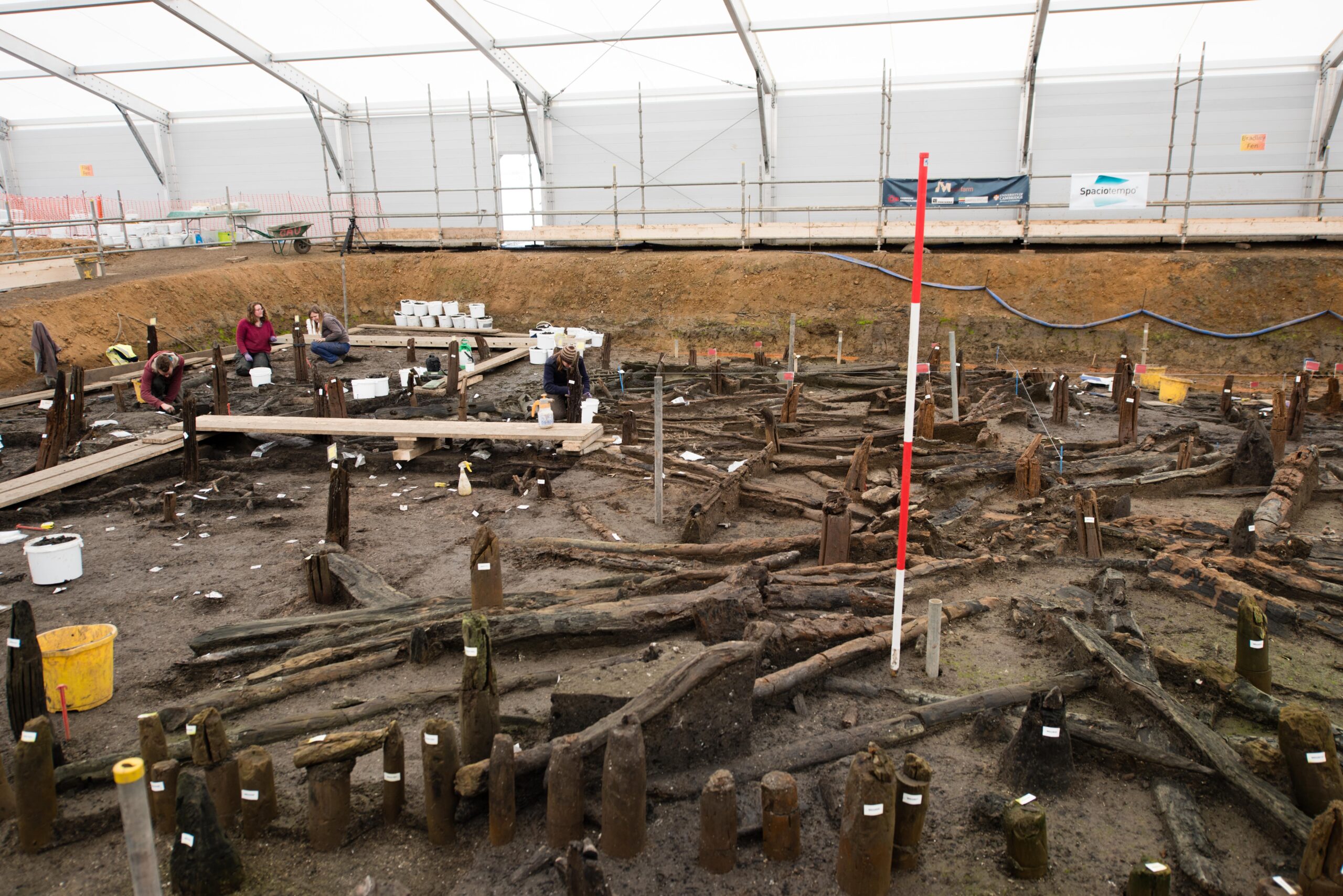
Photo by Dr. Colleen Morgan
If routes create exchange, gathering creates belonging.
Across the earliest evidence of human activity in this region, we find not only traces of settlement but signs of shared intention. At Flag Fen, timber causeways and platforms extended deliberately into wetland nearly three thousand years ago. Thousands of posts were driven into soft ground in what appears to have been coordinated construction.
Archaeologists have identified patterns of deposition in the water. Metalwork and tools were placed rather than lost. These acts are widely interpreted as ritual activity, suggesting that this landscape was not only lived in, but imbued with meaning.
It is important not to romanticise the prehistoric past. Communities here were also practical, domestic and skilled. Discoveries at Must Farm have revealed remarkably preserved roundhouses, woven textiles and crafted objects. These finds demonstrate sophisticated everyday life, technological capability and long-distance exchange.
Ritual and routine coexisted.
The act of building into water at Flag Fen was not simply symbolic. It required organisation, labour and shared understanding. Gathering was not optional. It was necessary.
The instinct to assemble did not disappear with the Bronze Age. Roman civic life structured public gathering through markets, religious observance and communal spaces. Later, the rhythms of ecclesiastical life centred on Peterborough Cathedral shaped calendars and collective memory. Feast days, processions and liturgical cycles created shared time.
Across centuries, agricultural fairs, seasonal markets and community events formed predictable patterns of assembly. To gather repeatedly in a place is to anchor identity to it.
Gathering is cultural infrastructure.
It transforms landscape into memory. It transforms individuals into community.
Modern Peterborough continues to express this instinct. Festivals, faith celebrations, sporting fixtures and public events may look very different from prehistoric ritual or medieval observance, yet the underlying function remains recognisable. They create shared experience in a place long shaped by cooperation.
There is something powerful in recognising that one of the region’s earliest monumental constructions stood not on solid ground, but in wetland. It suggests comfort with uncertainty. It suggests that meaning was created not by avoiding instability, but by working within it.
Peterborough’s contemporary diversity and vibrancy can be understood through that lens. A place long accustomed to gathering at edges becomes comfortable with difference. It develops a cultural resilience rooted in cooperation.
To mark time together is to say: we belong here.
From timber posts rising out of water to cathedral bells marking the hour to contemporary festivals filling public space, the thread remains visible.
Culture is not only what is preserved in cases or carved in stone. It is what is repeated, shared and remembered collectively.
In Peterborough, that repetition stretches back millennia.
#Peterborough2029
#ThisIsPeterborough
#DiscoverPeterborough