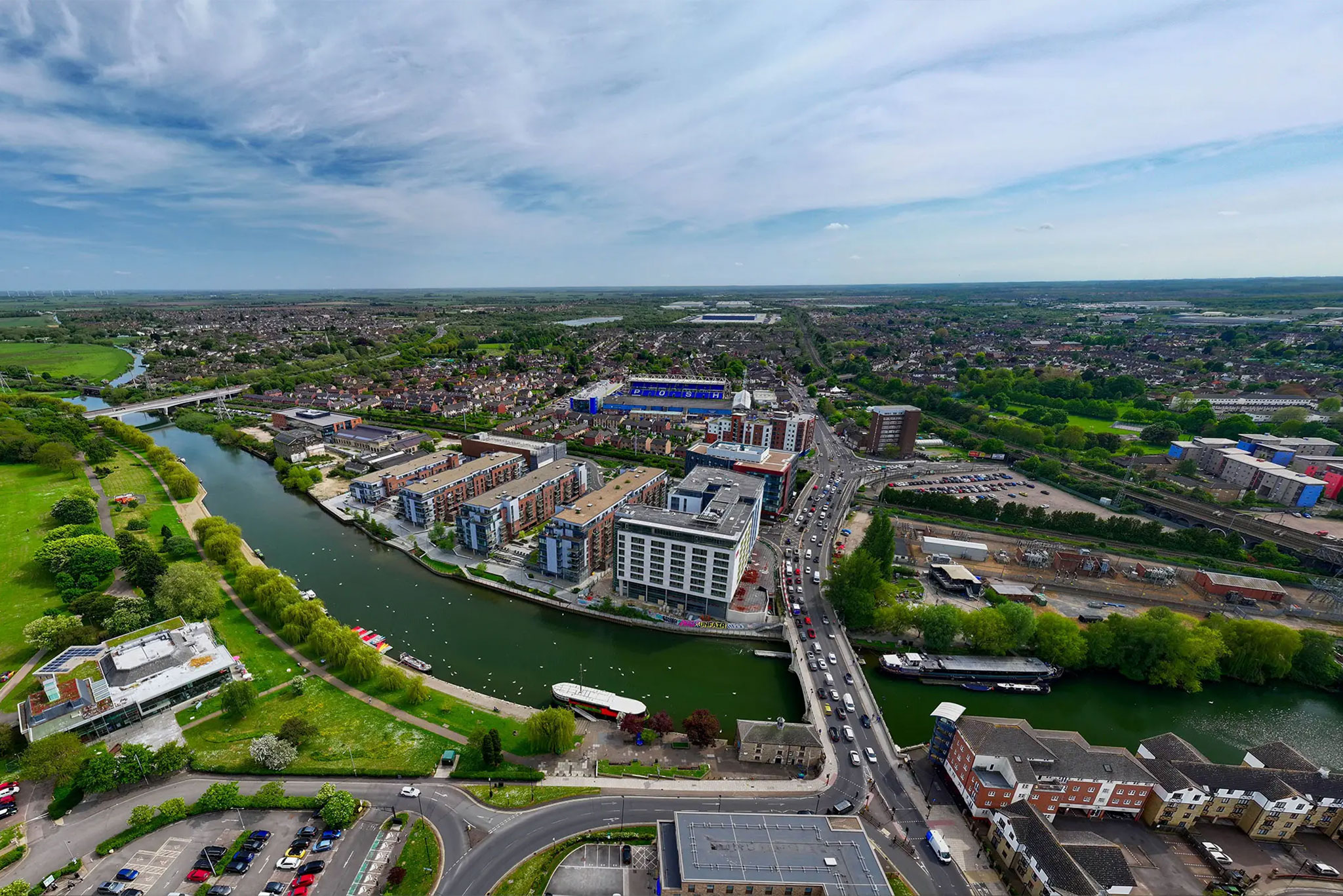
The River Nene is not an incidental feature of Peterborough. It is one of its defining lines.
Long before mapped roads and engineered railways, the river carved the valley and determined the edges of settlement. It shaped the contours that later generations would follow. Water created possibility and demanded awareness in equal measure.
In Roman times, proximity to the Nene strengthened the position of Durobrivae. Rivers in antiquity were not scenic backdrops but arteries of exchange. They enabled the movement of goods at scale, linking local production to regional networks. Clay vessels fired in local kilns could travel along water as well as road. Movement was multidirectional.
Yet the relationship between river and settlement predates Rome. For prehistoric communities, water was both a resource and boundary. It structured access, shaped agriculture and informed ritual. The act of building into wetland at Flag Fen demonstrates an early recognition of water’s cultural significance as well as its practical power.
As centuries passed, the Nene’s role evolved but did not diminish. Improvements in navigation extended its reach. Agriculture relied upon its proximity. Industry depended upon its accessibility. The valley it carved later guided rail infrastructure, with engineers following natural contours first shaped by water.
Routes originally traced by the river informed broader systems of transport and logistics. Even when newer technologies overtook it in prominence, the patterns first established by water continued to influence development. The river’s logic remained embedded in the city’s geography.
Yet the Nene has never been solely economic.
Its banks have long been places of gathering, reflection and recreation. Boats still line stretches of the water at Stanground, where riverside living continues a centuries-old relationship between settlement and flow. The presence of water is not abstract here. It is daily and tangible.
Close to the river, Peterborough City Rowing Club turns a lake into a site of discipline and collective endeavour. Rowing requires rhythm, coordination and endurance. In that sense, it mirrors the qualities the landscape has long demanded.
The riverbank also holds memory. The Trafalgar Memorial Copse and commemorative stone mark a national moment within local ground. The river becomes a setting where local and national narratives intersect. It carries remembrance as well as movement.
Rivers change gradually. They shift course, deposit sediment and reshape edges without fanfare. Settlements that endure beside them learn resilience. They adapt to fluctuation rather than resist it entirely.
Peterborough has done precisely that.
The Nene has offered connection outward and cohesion inward. It has facilitated trade and framed recreation. It has required management and invited stewardship.
To follow the river through Peterborough is to trace a continuous thread running from prehistoric settlement to modern civic life. Its presence explains more than topography. It reveals character.
A city formed beside a river understands movement intuitively. It recognises that exchange strengthens identity. It accepts that permanence and change coexist.
The Nene carries more than water. It carries labour, craft, sport, reflection and story.
It continues to shape the place Peterborough is becoming.#Peterborough2029
#ThisIsPeterborough
#DiscoverPeterborough